
We hear more and more that driverless cars will become a reality in the near future. Advertisements tout how these vehicles will reduce accidents and ultimately keep the roads safer. Still, as recent news involving a self-driving Tesla shows, several dangers remain inherent in their functionality.
Yet, industry experts still estimate that self-driving cars will be sold to consumers and hit the road over the next five years. Further, by 2035, it’s believed that 54 million vehicles on the road will be driverless. By 2050, every car and truck will have this functionality by default.
GM, Mercedes-Benz, Toyota, Volvo, Audi, Ford, and other companies have announced plans for their own self-driving vehicle models. As this vision continues to work towards becoming a reality, what are the pros and cons of autonomous vehicles?
The Pros of Self-Driving Cars
The prospect of autonomous vehicles is unbelievable, yet incredibly appealing to many drivers. Computer algorithms could replace the need for drivers to be completely accurate.
1. Decreased Number of Car Accidents
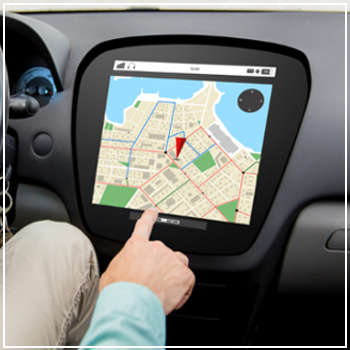
According to the American Trucking Associations, 80 percent of motor vehicle accidents are the fault of a driver. Computer errors or equipment malfunctions rarely cause accidents.
2. Decreased Amount of Distracted Driving
Distracted driving is a serious and deadly concern on our roadways today. The alarming number of fatalities as a result of texting and eating behind the wheel could be decreased by self-driving cars.
3. Decreased Expenses Per Driver
The US Department of Transportation estimates that each human life is worth $9.2 million. If roadway collisions were to decrease, some experts speculate that healthcare and other insurance costs could also decline.
4. Reduced congestion and improved traffic flow
Studies show that driverless vehicles, when networked and optimized, can significantly smooth traffic patterns. For example, autonomous cars reduce “phantom congestion” (traffic slowdowns caused by human-driving variability) by driving more uniformly and coordinating more precisely. As a result, fewer stop-and-go waves occur, leading to less wasted time, lower fuel consumption, and lower emissions.
5. Greater accessibility and mobility for underserved populations
Autonomous vehicles can offer mobility solutions for people who are unable to drive (e.g., the elderly, the visually impaired, or those without a license). A study found that AVs could reduce the need for vehicle ownership and increase independent mobility for these groups. This means fewer people are left behind due to mobility constraints and potentially improved access to jobs, healthcare, and social connections.
6. Economic and environmental benefits from sharing and optimizing fleets
When autonomous vehicles are used in shared services (fleet-based rather than individual ownership), they can reduce the number of vehicles needed to serve the same number of trips. Shared AVs might replace more than 10 conventional vehicles in some settings. That implies lower manufacturing demand, fewer resources used, and a faster turnover toward cleaner technologies (thus lower embodied emissions). Also, a 2023 industry report estimates that autonomous driving could generate US$300-400 billion in passenger-car market revenue by 2035, suggesting significant economic upside.
The Cons of Self-Driving Cars
On the other hand, there are many concerns about the future of self-driving cars. It will take time to see a change in the number of accidents, especially if the initial cost is high.
1. Accidents During the Transition Period
Analysts tracking the development of self-driving cars talk about a transition period – a time, likely over several years, when these vehicles will be on the road alongside standard-driven cars. Amidst the predictions is a higher accident risk for conventional cars. Recent studies found that these vehicles can’t always avoid collisions that aren’t typically caused by driver behavior.
2. Hacking
Many actions of self-driving cars are determined by a computer telling it how to move. But, like with many computerized devices, hacking risks are always a possibility. Once it’s compromised:
- A hacker could access your personal data, including whether or not you’re at home. This can lead the individual to break into and burglarize your property.
- Intentional traffic jams involving multiple hacked cars could occur, leaving major roads immobilized for extended periods and causing widespread chaos.
- It could be used as a weapon, either reprogrammed to pursue obstacles or to behave like an explosive.
3. Not All Accident Risks are Eliminated
While a self-driving car might stop you from rear-ending another driver, it still has a few serious accident risks:
- Driverless vehicles aren’t prepared to stop for jaywalking pedestrians.
- They might not sense when another motorist isn’t obeying the rules of the road.
- It has potential for both computer and physical defects.
- They’re not suited for all weather conditions. In particular, for existing models, heavy rain can damage the laser sensor mounted on the car’s roof, rendering a crucial part of its operation inoperable.
4. Minimized Driver Interaction
The type of blinder-like behavior many people exhibit when staring at their smartphones could spread from the sidewalk to the road. In the process, drivers may become used to not making eye contact with other motorists. As a result, they are less alert to their surroundings.
Further, the experience acquired through education and years of driving still has to be replicated by a self-driving car. Currently, models don’t factor in:
- The knowledge an experienced driver has for handling the roads in a range of conditions, including going slower in the rain and giving motorcycles more space.
- Individual states’ driving laws, such as when it’s legal to turn right on red.
- Handling roadblocks.
- Routes not included in GPS systems, which is how self-driving cars currently navigate roads.
5. Different Driver Education
Right now, aspiring motorists of all ages have to go through a driver’s education course that includes learning the rules of the road and spending time in a car with an instructor. However, there’s no mandate for operating a self-driving car’s computer system. Thus, there’s potential for a driver unfamiliar with how this new car operates to get on the road and wreak havoc. Years down the line, essential “traditional” driving education may be phased out, leaving motorists without a basic understanding of the rules of the road.
6. Decreased Number of Jobs in Public Transportation
Disabled individuals or those who never obtained their driver’s licenses would no longer have to rely solely on trains, buses, and taxis to reach their destinations. The demand for drivers of these vehicles could decrease significantly.
Self-Driving Cars May Be the Future, But Accidents Still Happen Now
No matter the type of vehicle driven, you may still find yourself the victim of a damage-causing collision, dealing with an insurance company that doesn’t want to pay. If you’re in this situation, turn to Trantolo & Trantolo’s Connecticut car accident lawyers. If you believe you have a claim, contact any of our locations today.


